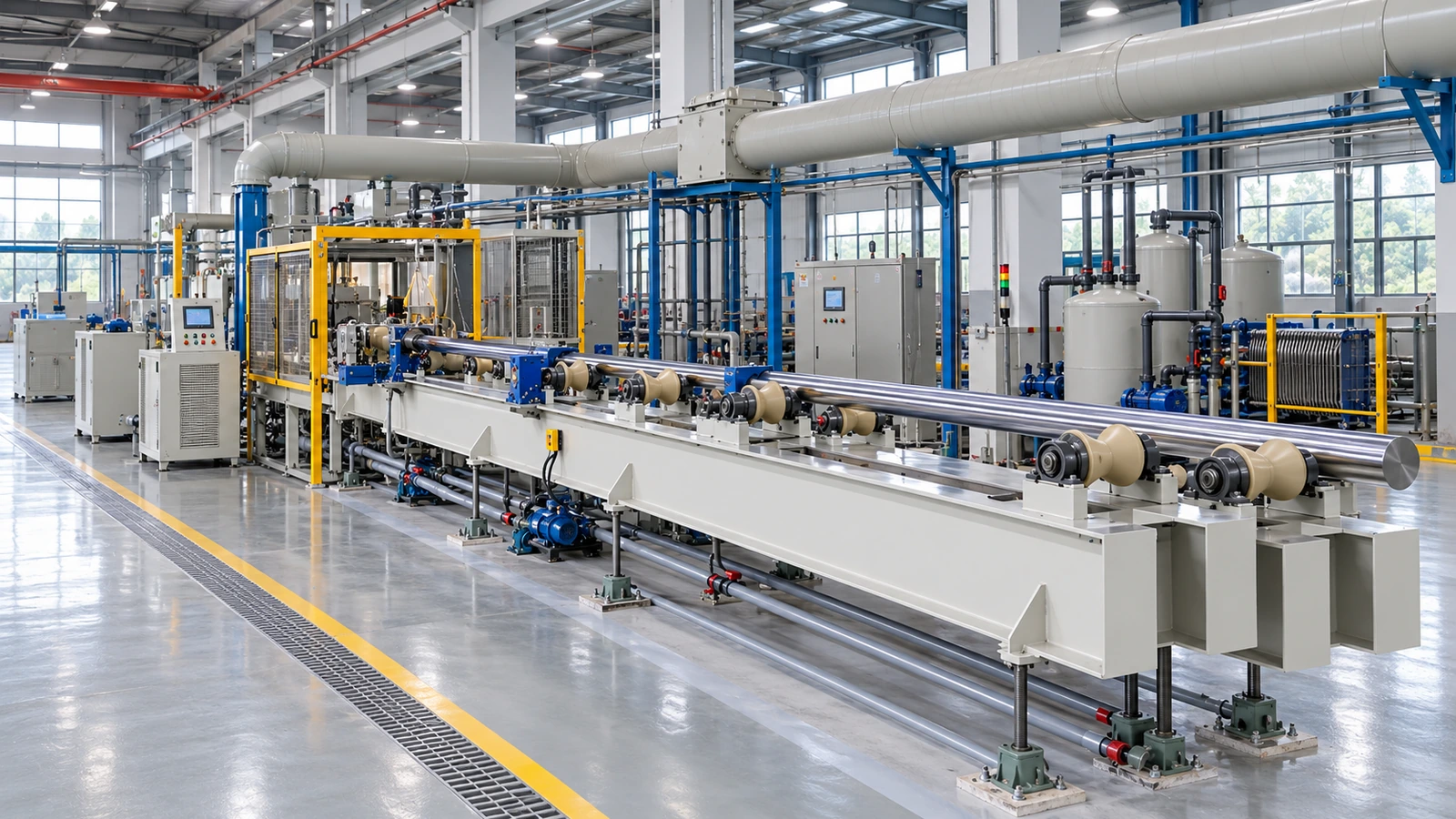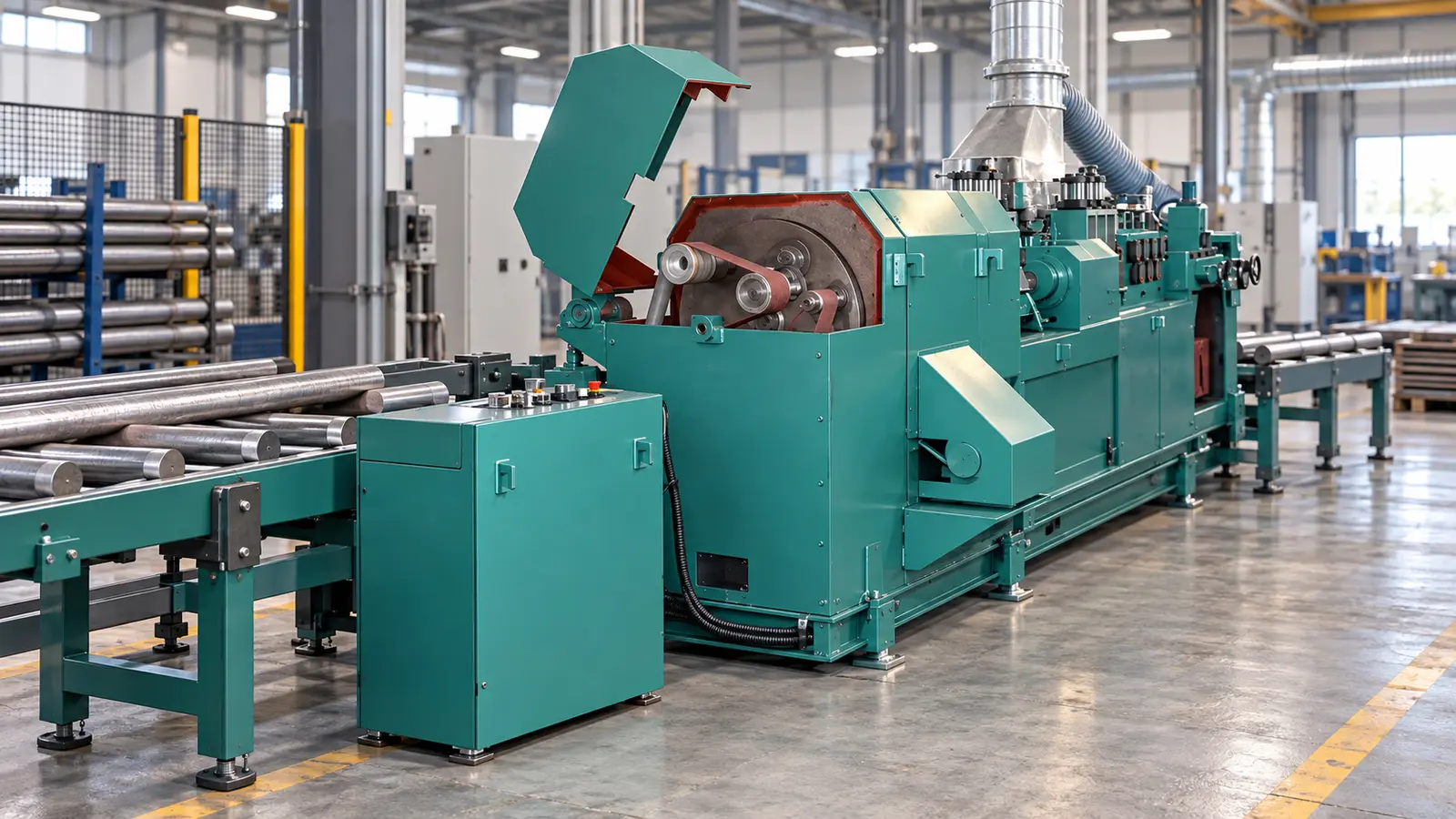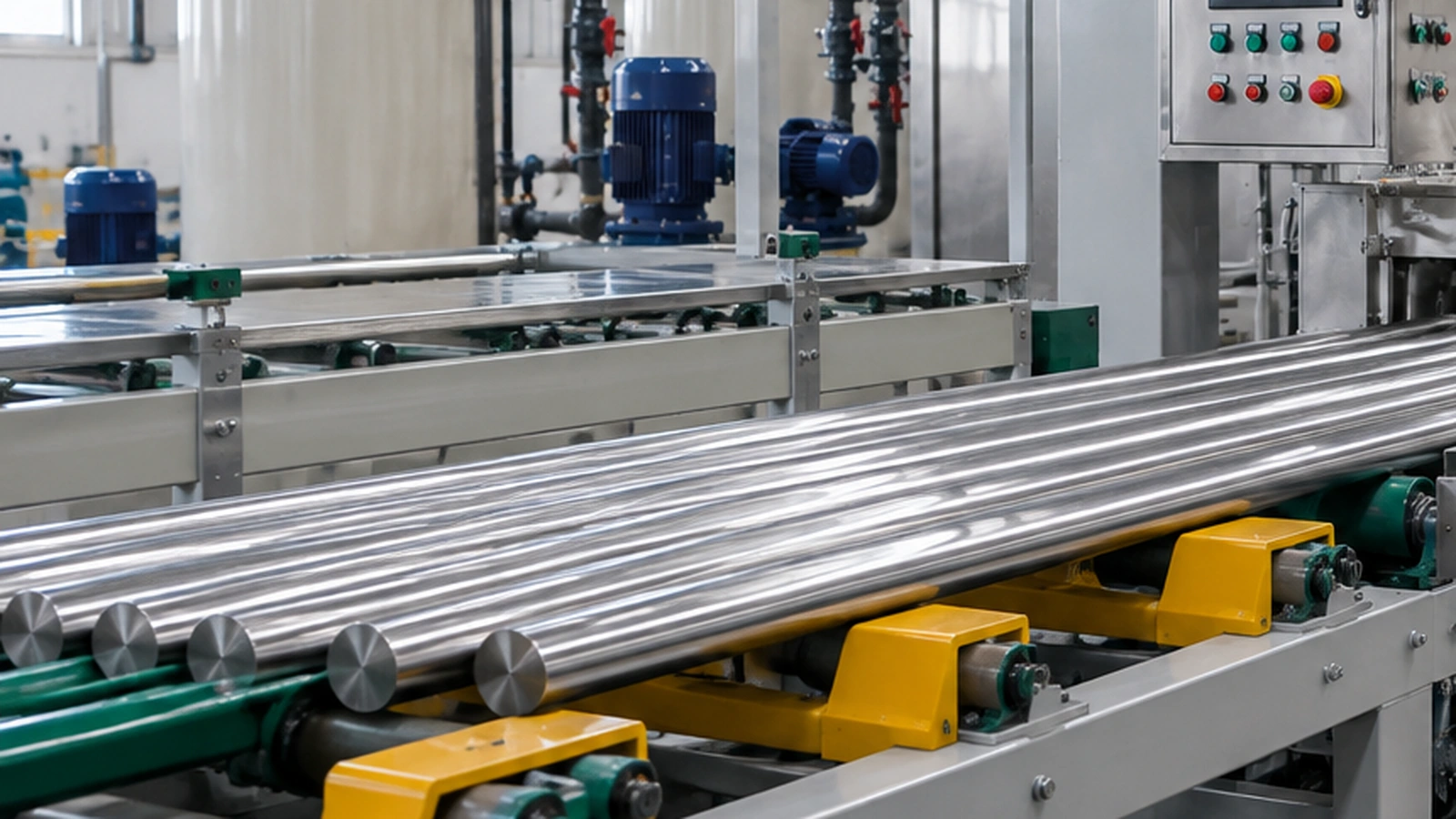
What Workpiece Details Matter When Ordering an Abrasive Belt Polishing Machine?
An abrasive belt polishing machine should not be selected from a diameter range or a desired appearance alone. Buyers first need to define the material, workpiece geometry, size range, incoming surface condition, defects to be removed, required final finish, allowable stock removal, production rate and inspection method. These inputs determine whether the application needs light finishing, controlled defect removal, descaling or multi-stage polishing—and whether one machine configuration can cover the full product mix. A useful RFQ should therefore connect workpiece condition → finishing objective → process route → equipment configuration → sample evidence. The correct machine is the one that produces the specified result on representative parts at the required rate, not simply the model with the largest listed capacity.
Start With the Workpiece, Not the Machine Model
The term “metal polishing” covers very different production tasks. One buyer may need to remove light oxidation from straight carbon-steel bars before drawing. Another may need to blend machining marks on shafts. A third may need a consistent cosmetic finish on stainless-steel tubes. All three can involve an abrasive belt, but they do not create the same contact pressure, abrasive sequence, feeding, support, extraction or inspection requirement.
Before discussing a model, prepare a workpiece family. Separate round bar, tube, shaft and profile products; identify the material grade or material family; and state the minimum and maximum diameter or section, length and mass. If the product mix includes bent, tapered, stepped or irregular parts, identify them separately rather than assuming a through-feed machine can accept them.
This is why buyers should begin with the actual product range and then review the supplier’s metal polishing machine category. The category helps establish available finishing approaches, while the workpiece data determines which approach deserves further evaluation.
How Does the Incoming Surface Condition Change the Process?
“Raw material” is not a sufficient surface description. The supplier needs to know what is present before polishing: mill scale, rust, drawing marks, peeling lines, heat-treatment oxide, machining marks, burrs, scratches or a previously processed surface. Photographs help, but a representative sample and a written defect definition are more useful than photographs alone.
The severity and distribution of the defect matter. A shallow, continuous directional mark is different from isolated pits. A process that improves brightness may not remove a deep defect without excessive stock removal. Likewise, a line designed for consistent finishing should not be expected to correct straightness, large dimensional errors or material defects that belong to an upstream process.
Buyers should state which defects must be removed, which may remain and which must be rejected before the polishing stage. That boundary prevents a quotation from silently assuming that the machine only performs light finishing when the factory actually expects corrective grinding.
Define the Finish as an Acceptance Requirement
Words such as “smooth,” “bright” and “mirror-like” are not complete acceptance criteria. They can be useful as visual intent, but the RFQ should connect them to a measurable or approved reference. Depending on the application, this may include surface roughness, an approved visual sample, directional pattern, defect limit, coating-preparation condition or a combination of these.
Surface roughness and appearance are related but not interchangeable. Two surfaces can have similar roughness readings while showing different directional lines, gloss or local defects. Conversely, a visually bright area does not prove that the complete length meets the required roughness or defect-removal requirement.
If roughness is specified, identify the required value, measurement method, instrument setup, sampling locations and whether the requirement applies before or after any later coating or plating. Do not apply a single number to every project without confirming material, starting condition and functional purpose.
Which Variables Should Buyers Freeze Before Model Selection?
| Decision area | Buyer input | Why it matters | Supplier evidence |
|---|---|---|---|
| Material | Grade or material family and supplied condition | Changes abrasive behavior, heat generation and achievable finish | Written application review and sample result |
| Geometry | Bar, tube, shaft or profile; straight or irregular | Defines feeding, support and contact arrangement | Configuration drawing or layout |
| Size range | Minimum/maximum diameter or section, length and mass | Controls model, work support and changeover scope | Confirmed operating envelope |
| Incoming condition | Scale, rust, marks, burrs and defect depth | Defines removal duty and abrasive stages | Sample trial and before/after record |
| Final condition | Roughness, appearance and allowable residual defects | Establishes acceptance rather than subjective expectations | Inspection method and approved sample |
| Stock removal | Allowed dimensional change or removal target | Prevents over-processing or unmet defect-removal expectations | Trial measurement and process proposal |
| Throughput | Parts per hour, tonnes per shift or line speed requirement | Connects finish quality with production capacity | Cycle assumption and line configuration |
| Environment | Dust collection, noise, utilities and plant restrictions | Determines auxiliary scope and installation readiness | Utility list and interface schedule |
Why Do Size Range and Product Mix Need Separate Review?
A model range on a product page is useful for shortlisting, but it does not prove that every workpiece can be processed under one setup. Diameter, length, section shape, weight and material may influence feeding stability and support. Changeovers may also affect output when a plant frequently switches between small bars and large tubes.
Haige’s product data lists multiple abrasive belt polishing machine models with different diameter ranges, minimum workpiece lengths, feed speeds and motor configurations. These values describe a family rather than a universal machine. A buyer should request the exact proposed model and ask the supplier to mark which input values are standard, optional, project-specific or outside the reviewed range.
Where the product mix is wide, divide it into a normal production family and exceptional products. The quotation can then state whether exceptional products require another setup, reduced speed, auxiliary support, a different model or a separate process.
How Should Buyers Connect Abrasive Selection With the Finish Target?
The abrasive belt is a process consumable, not a detail to postpone until commissioning. Abrasive type, grit sequence, belt speed, contact pressure and number of stages influence removal rate, heat and surface pattern. However, the correct combination cannot be selected reliably from material name alone.
A practical route is to provide representative samples and define the acceptance result. The supplier can then propose a belt sequence and operating window for the trial. The buyer should record the incoming condition, belt specification used, passes or stages, feed condition, final measurement and visual result. That record becomes a starting process recipe—not a guarantee that every future batch will behave identically.
Consumable life should also be treated as a test result under defined conditions. It varies with scale, contamination, removal duty and operating discipline. Avoid comparing suppliers through an unsupported “belt life” number that was obtained on a different workpiece.
Where Does Heat Become a Procurement Issue?
Abrasive contact generates heat. The procurement question is not simply whether the machine can polish the part, but whether it can do so without unacceptable discoloration, distortion, surface damage or unstable belt performance under the planned duty cycle. Thin-wall tubes, heat-sensitive materials and long continuous runs may need particular review.
The RFQ should state whether coolant or lubrication is permitted, whether the final surface must remain dry, and whether later cleaning, coating or plating imposes contamination restrictions. The supplier should identify the proposed process and any required extraction or fluid-handling interface. The buyer should then verify it on a representative sample and production-rate trial.
Dust Collection Is Part of the Machine Scope
Grinding and polishing can generate particulate, and the actual hazard depends on the workpiece, coating, contamination and abrasive. Therefore, “dust collector included” is not a complete project definition. Buyers should provide material information and applicable site requirements, then ask the supplier to define collection points, duct interfaces, airflow assumptions, filtration scope and what remains the buyer’s responsibility.
The machine layout should also show access for belt changes, cleaning and collected-dust removal. If the supplier excludes the main collector, the quotation should still provide the connection information required for the plant’s extraction design. Local occupational and environmental requirements remain project-specific and must be reviewed by the buyer.
How Should a Sample Trial Be Structured?
A meaningful trial uses samples that represent production, not only the easiest part. Include the most common workpiece, the smallest and largest relevant sizes, and the most difficult incoming surface condition. Mark each sample so its process record can be matched to its result.
The approval plan should define:
- incoming material, geometry and defect condition;
- required final roughness and visual reference;
- critical dimensions before and after processing;
- abrasive sequence and operating assumptions;
- inspection locations and instruments;
- acceptable residual defects and rejection criteria;
- whether the result is a process demonstration or a contractual acceptance sample.
After approval, preserve the sample, photographs, measurement report and agreed process notes. If the production material or incoming condition later changes, review whether a new trial is required.
How Should Buyers Evaluate Haige’s Abrasive Belt Polishing Machine?
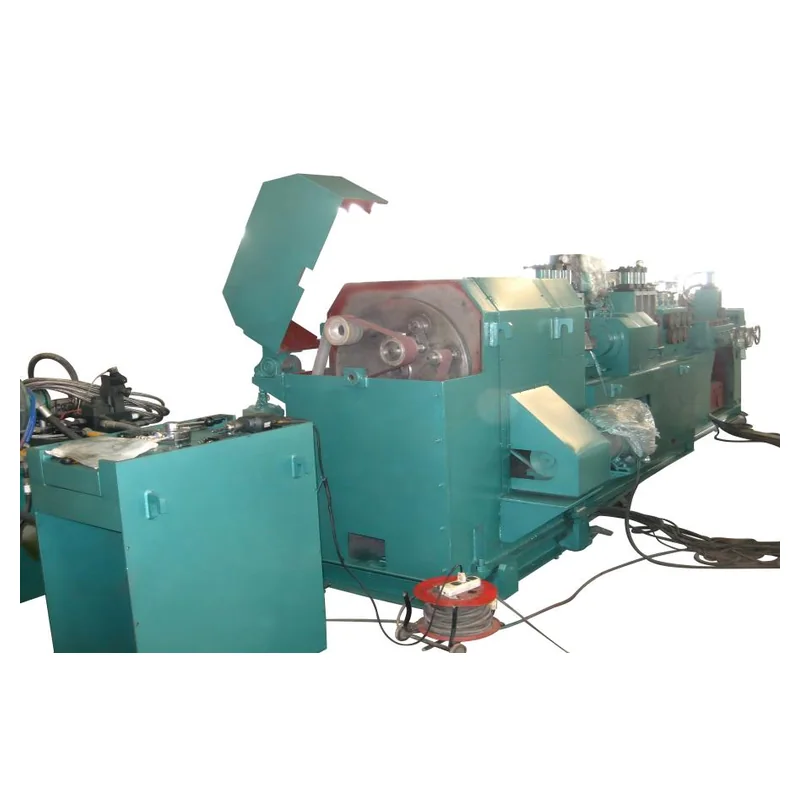
The Haige abrasive belt polishing machine page provides a real model family for bars, tubes, shafts and profiles. It lists model-specific diameter ranges, minimum lengths, speeds, roughness information and motor configurations. These published values are appropriate for initial screening, but the offered model should still be confirmed against the buyer’s complete workpiece range and acceptance plan.
Ask Haige to return one proposed configuration with the exact model, applicable workpiece envelope, included polishing stations, feeding and support arrangement, abrasive assumptions, dust-collection boundary, controls, utilities and excluded items. Any value that depends on the material or trial should be labeled accordingly rather than presented as an unconditional production result.
What Common RFQ Mistakes Create Rework?
- Sending only the maximum diameter. The minimum size, length, mass and geometry may be equally important.
- Using “mirror finish” without evidence. The supplier cannot price or prove a subjective target consistently.
- Ignoring the incoming defect. Light finishing and deep defect removal are different duties.
- Comparing model speed without the same finish. Throughput is meaningful only when the required output quality is held constant.
- Leaving dust extraction outside the interface schedule. An unassigned connection can delay installation.
- Approving a clean sample that does not represent production. The trial then provides weak evidence for bulk operation.
What Should an Abrasive Belt Polishing Machine RFQ Include?
Include material grade and condition; workpiece form; minimum and maximum diameter or section; length and mass; incoming surface photographs and representative samples; defects to remove; allowable stock removal; final roughness and visual standard; production mix; target throughput; upstream and downstream processes; coolant restrictions; dust-collection requirements; utilities; line layout; inspection method; trial requirements; required documents; quantity; destination; and installation responsibility.
Ask the supplier to respond to each item as Confirmed / Deviation / Alternative / Buyer Input Required. When the workpiece data and sample plan are ready, submit them through the Haige metal finishing equipment inquiry form and request a model-specific proposal rather than a generic machine price.