Which Round Bar Peeling Machine Details Should Buyers Send Before an RFQ?
A round bar peeling machine RFQ should include the buyer’s workpiece and process data before model selection begins. Buyers should send bar diameter range, length range, material family, incoming surface condition, surface defects to be removed, required stock-removal allowance, target finished diameter, straightness condition, upstream cutting or straightening status, downstream grinding or polishing needs, loading method, production rhythm, chip-handling expectation, inspection requirements and quotation scope. Without this information, a supplier may shortlist a machine that matches only the product name but not the actual bar condition or finishing process.
Round Bar Peeling Is Selected for a Specific Surface-Removal Job
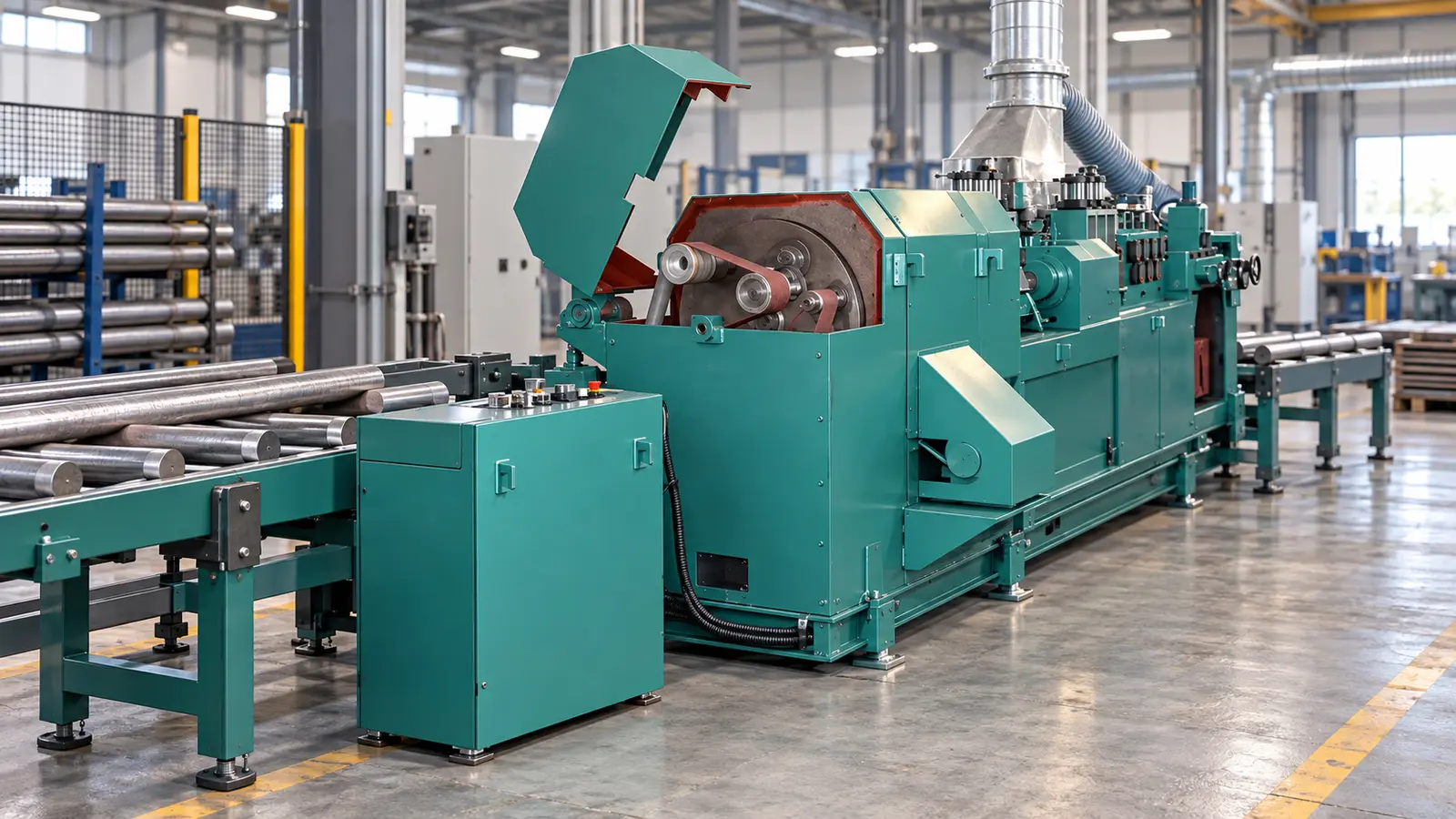
Round bar peeling removes a controlled layer from the outside diameter of bar stock. It is commonly considered when the buyer needs to remove surface defects, scale, decarburized layer, rolling marks or inconsistent skin before producing bright bars or preparing material for precision finishing. In procurement terms, the machine is not chosen only by the phrase “bar peeling.” It is chosen by the material condition and the surface result required after peeling.
A buyer who sends only a bar diameter and quantity is leaving too much for the supplier to guess. The supplier needs to know what problem the machine must solve: heavy surface defects, dimensional preparation, bright-bar production, pre-grinding stock removal, or a process step before straightening and polishing. Each purpose affects model shortlisting, feeding method, cutter arrangement, removal allowance and inspection focus.
Haige lists Bar Peeling Machines as a dedicated category within its metal-finishing equipment scope. That category is the right product family for this topic, while the RFQ must define the actual bar and process conditions.
Send Bar Size Range, Not Only One Nominal Diameter
The first data field is the real size range. A peeling project should specify minimum and maximum incoming diameter, expected finished diameter, bar length range, tolerance requirement if controlled, and whether the buyer processes one stable size or many sizes. A machine selected for one narrow production program may not be the best fit for a service center or bright-bar producer handling varied stock.
Diameter range affects machine selection, guide/support design, feeding stability, tool engagement, stock removal and inspection. Length affects loading tables, support rollers, unloading, safety guarding and floor layout. Bar weight and handling also matter when the line is connected to cutting, straightening or grinding equipment.
Buyers should avoid vague phrases such as “medium size round bar.” The RFQ should include a table of current and future sizes:
- incoming diameter range;
- target finished diameter or removal allowance;
- bar length range;
- minimum and maximum batch quantity by size;
- straight or slightly bent incoming condition;
- whether future size expansion is expected.
If the buyer expects future products outside the first size range, that should be disclosed. Designing a line only around today’s easiest bar may create a second purchase problem later.
Material Condition Changes Cutting Load and Process Planning
Material is not a decorative RFQ field. Steel grade family, hardness condition, heat-treatment state, rolling or forging route and surface scale can change the peeling load and process route. The supplier does not need the buyer’s full confidential specification, but it needs enough information to judge whether the proposed machine concept is suitable.
Useful inputs include whether the bar is carbon steel, alloy steel, stainless steel or another material family; whether it is hot rolled, forged, annealed, normalized, quenched/tempered or otherwise treated; and whether the surface has hard scale or inconsistent defects. If the buyer processes several material families, list them separately rather than averaging them into one request.
Material condition interacts with stock removal. A light, uniform surface cleanup is different from removing deeper defects or a heat-affected surface layer. If the required removal is underestimated, the finished bar may still show defects. If it is overestimated, the process can waste material, increase tool load and create unnecessary production cost.
The RFQ should therefore connect material condition → defect depth → stock removal → finished diameter → inspection acceptance. This chain helps the supplier evaluate the process rather than simply quote a machine model.
Describe the Surface Defect Target Clearly
Buyers often ask for “better surface quality,” but that phrase is not enough for a peeling-machine RFQ. The supplier needs to know what must be removed and how the buyer will judge acceptance. Surface scale, pits, shallow cracks, decarburized layer, rolling marks and corrosion are different problems. Some may be removed by peeling; others may require additional process review or upstream material control.
The best RFQ evidence is a combination of photos, sample bars, defect description and finished-surface requirement. If the buyer has a current rejected part, provide pictures of the defect and explain the downstream failure: grinding marks, plating issue, drawing defect, customer rejection or dimensional problem. This context helps the supplier understand why the peeling step is being added.
A supplier cannot responsibly guarantee removal of every defect without knowing defect depth, distribution and material condition. The buyer should therefore ask for a process recommendation and sample-test logic rather than a general promise that the machine removes all defects.
| RFQ Field | Buyer Input | Why It Matters |
|---|---|---|
| Surface defect | Photos, sample bars, defect type and severity | Defines whether peeling is the correct removal method |
| Removal allowance | Required stock removal per side or final diameter target | Links defect removal to dimensional acceptance |
| Incoming condition | Scale, corrosion, straightness and material state | Affects feeding, cutting load and line preparation |
| Downstream process | Grinding, polishing, straightening, drawing, plating or storage | Determines the required surface and dimensional condition after peeling |
| Acceptance evidence | Dimensional check, visual sample, roughness target if specified | Shows how the buyer will approve the process result |
The table gives the supplier enough information to judge process feasibility. It also protects the buyer from a model-only quotation that does not address the real surface problem.
Straightness and Upstream Preparation Affect Feeding Stability
Round bar peeling machines need stable workpiece feeding. If incoming bars are bent, cut poorly, heavily scaled or inconsistent in length, the peeling result may be affected even when the machine is technically suitable. Therefore, the RFQ should describe upstream preparation.
Important inputs include whether the bars are cut to length before peeling, whether they pass through straightening first, what bending condition is expected, and whether ends are chamfered or prepared. If the line receives bars directly from rolling, forging or heat treatment, the surface and straightness may vary more than if bars are pre-straightened and sorted.
Feed stability affects tool engagement, dimensional consistency, surface appearance and operator workload. A machine quoted for well-prepared straight bars may not perform the same way if the buyer feeds mixed-condition material without upstream control. The supplier should identify any required preparation step before the buyer approves the line.
This does not mean every project needs a new straightening machine or cutting line. It means the upstream condition should be declared so the supplier can decide whether the peeling machine can stand alone or should be integrated with other processing equipment.
Downstream Finishing Determines the Required Result After Peeling
Peeling may be the final surface-removal step, or it may prepare the bar for downstream grinding, polishing, straightening, drawing or plating. The required result after peeling changes according to the next process.
If the bar goes to centerless grinding, the peeled surface may need enough uniformity and stock condition for grinding efficiency. If the bar goes to polishing, visible surface marks after peeling may affect the amount of polishing required. If the bar is prepared for drawing or plating, dimensional and surface consistency may matter for the next process. If the bar is sold as a bright bar after several operations, the buyer needs the entire process sequence to be aligned.
The RFQ should state where the peeling machine sits in the process flow:
cutting or straightening → peeling → straightening or grinding → polishing or final inspection, or another route defined by the plant.
A supplier response that ignores downstream finishing may still quote a machine, but it may not quote the right process. For B2B purchasing, the machine must fit the line, not only the individual operation.
Automation Level Should Match Production Rhythm
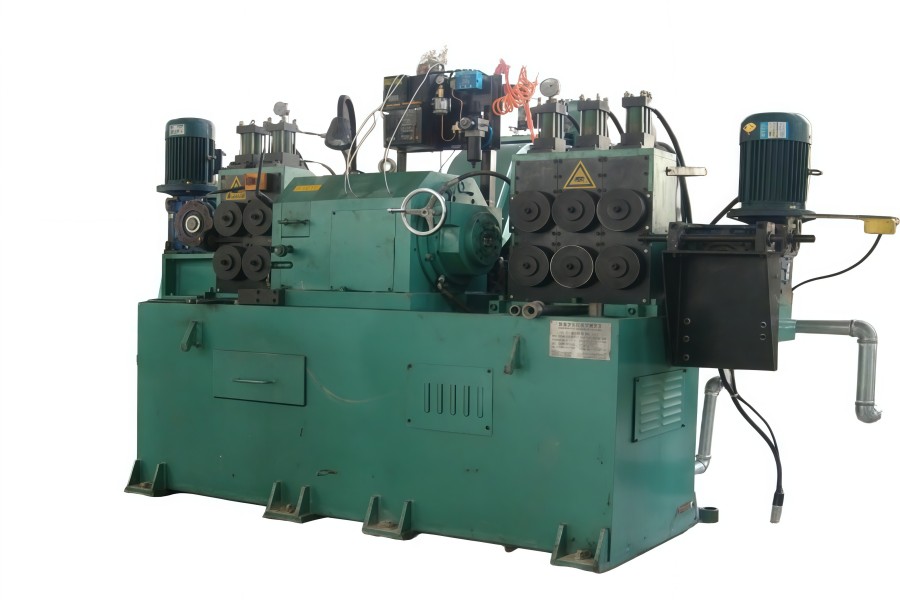
Haige’s WXC30C product record identifies it as a semi-automatic type, with operation described as both hydraulic and manual. That gives the buyer a product reference point, but it does not define every handling, loading, unloading or inspection function in the final project.
The buyer should decide whether the project needs a semi-automatic process, CNC-controlled model, automatic loading/unloading, integrated conveyor, chip handling, tool-setting support or basic machine supply. Production rhythm determines this decision. A repair shop, service center and bright-bar line do not necessarily need the same automation level.
Semi-automatic equipment may suit projects where operators handle part of the process and production variety is relatively high. More automated systems may be considered where stable size ranges and continuous output justify additional handling and control. The correct choice depends on the buyer’s production plan, not only on machine attractiveness.
The RFQ should ask the supplier to separate the base machine from optional handling, tooling, chip-management and control items. This keeps quotations comparable and prevents a low price from hiding missing line functions.
Inspection Requirements Should Prove the Process Result
Inspection should be tied to the reason the buyer is purchasing the peeling machine. If the goal is dimensional preparation, finished diameter and roundness or related dimensional checks may be important. If the goal is surface-defect removal, visual inspection, sample cuts or downstream test results may matter. If the goal is line integration, feeding stability and output consistency become part of acceptance.
Buyers should define what is checked during sample approval and what is checked after installation. Possible evidence includes sample bar before/after photos, dimensional measurement, surface review, trial processing record, process-parameter note, tooling recommendation, line layout drawing and acceptance checklist. Each item should prove a specific requirement rather than exist as generic paperwork.
For example, a before/after sample proves whether the selected removal allowance addresses the visible defect. A dimension report proves whether the machine and process can reach the final diameter target under the trial condition. A layout drawing proves whether loading, unloading and chip removal fit the buyer’s workshop.
Evidence should therefore answer: what was tested, on which material, at what incoming size, with what removal allowance, and against which acceptance target.
How Should Buyers Review the WXC30C Product Page?
The WXC30C page is the target product detail reference for this article. It should be used as a specific semi-automatic round bar peeling machine reference within the broader Bar Peeling Machines category.
Buyers should not treat the product page as a complete RFQ package. The page identifies the product direction, but the buyer still needs to supply workpiece dimensions, material condition, defect target, removal allowance, upstream preparation, downstream finishing, production rhythm, line layout and acceptance evidence.
If the buyer’s diameter range, automation expectation or line integration need falls outside the WXC30C project fit, the supplier should recommend another model or a different bar peeling configuration rather than forcing the inquiry into one page. Haige’s product data also lists other WXC series machines, so the final model should be confirmed from the RFQ inputs.
What Makes Round Bar Peeling Machine Quotations Non-Comparable?
Quotations become hard to compare when suppliers are not pricing the same process. Common gaps include:
- the buyer provides nominal diameter but not full diameter and length range;
- surface defects are described vaguely without photos or samples;
- material hardness or process history is missing;
- required stock removal and final diameter are not connected;
- straightness and upstream cutting condition are not declared;
- downstream grinding, polishing or drawing needs are ignored;
- loading, unloading, chip conveyor, tooling and auxiliary equipment are not separated;
- inspection and sample approval are not defined;
- one supplier quotes a base machine while another quotes a more complete line package.
Before comparing price, align workpiece scope, process target, machine model, included equipment, sample evidence and acceptance method. Only then can the buyer judge whether a lower quotation is genuinely better or simply less complete.
Build the Final RFQ Around Workpiece Evidence
A complete round bar peeling machine RFQ should include:
- incoming bar diameter range and target finished diameter;
- bar length range and weight/handling condition;
- material family and heat-treatment or rolling condition;
- surface defect type, severity, photos and sample availability;
- required stock-removal allowance or final surface target;
- incoming straightness and cut-end condition;
- upstream process before peeling;
- downstream grinding, polishing, straightening, drawing or plating process;
- production volume, batch size and size-change frequency;
- desired automation, loading and unloading scope;
- tooling, chip handling and auxiliary equipment expectations;
- workshop layout and available space;
- sample trial and acceptance method;
- documentation, installation and commissioning requirements;
- supplier assumptions, exclusions and deviations.
Ask suppliers to return the offer as Confirmed Workpiece Range / Recommended Model / Process Assumptions / Included Equipment / Sample Evidence / Acceptance Method / Buyer Input Required. Once the workpiece and process evidence are prepared, buyers can submit the inquiry through Haige’s contact page with enough detail for a round bar peeling machine shortlist and quotation.