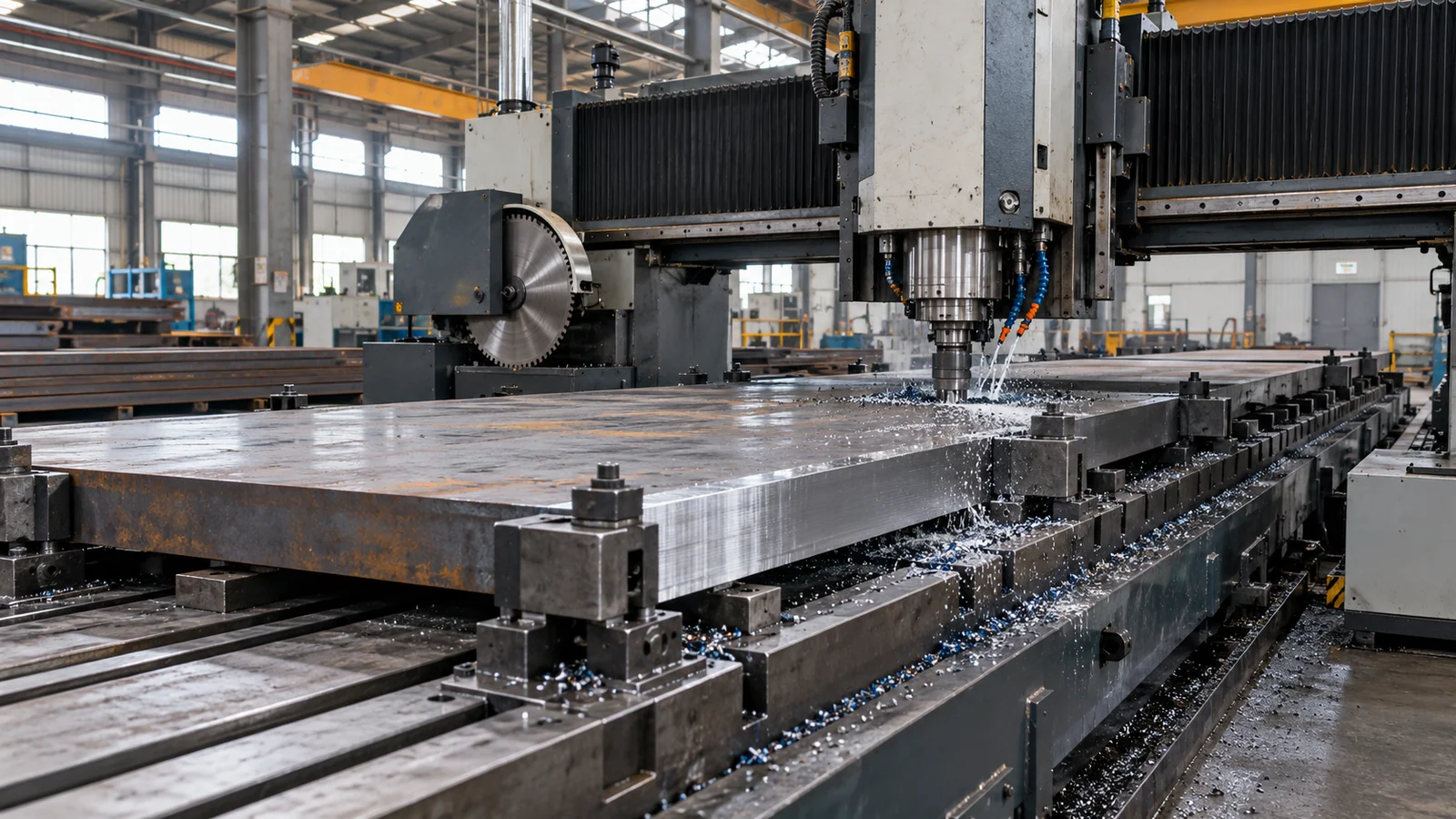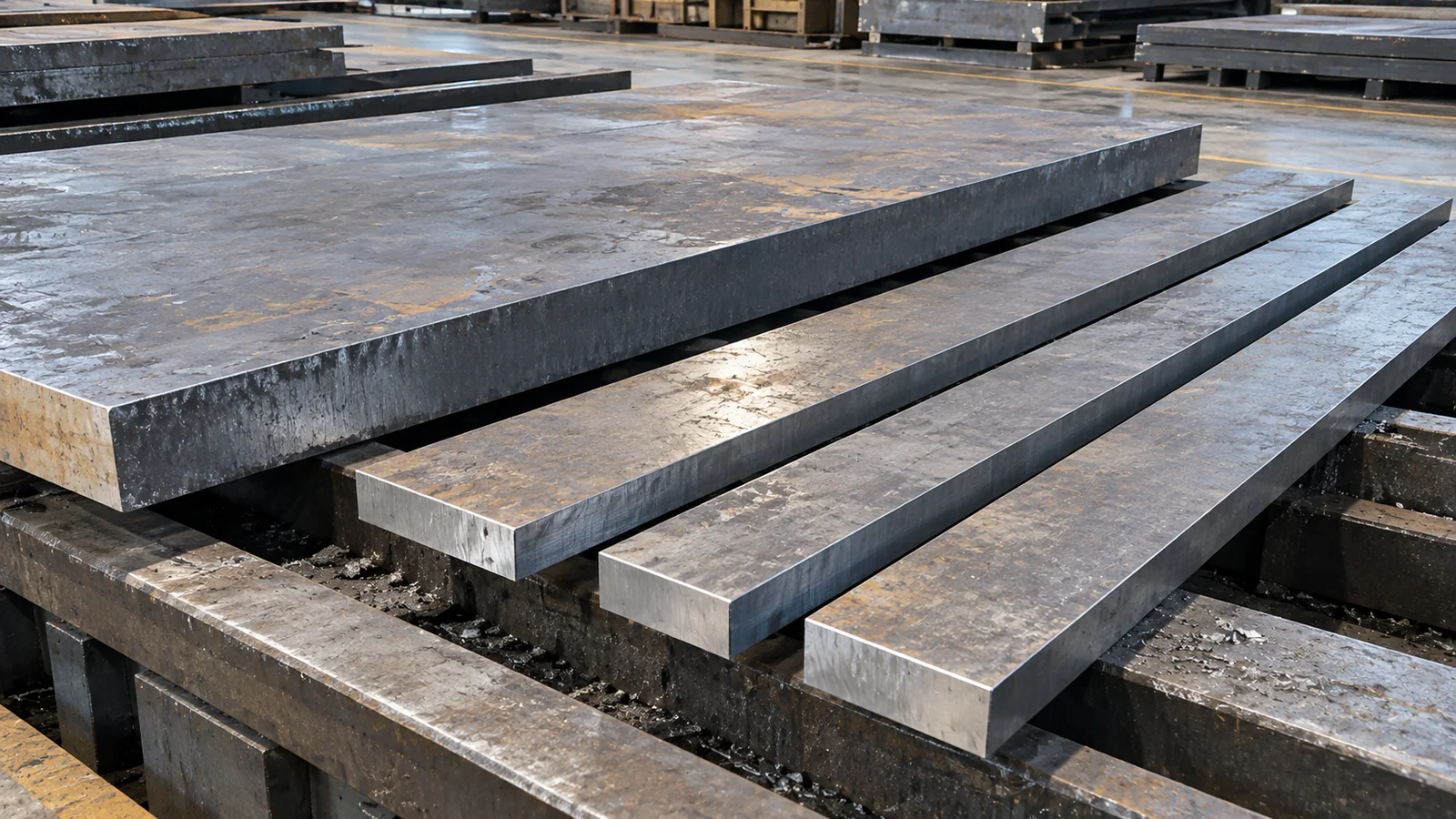
When Should Buyers Use an Automatic Centerless Grinding Machine in a Bar Finishing Line?
An automatic centerless grinding machine is a strong fit when a production line repeatedly processes cylindrical workpieces that can be supported, rotated and fed consistently through the grinding zone. The decision should not begin with automation level alone. Workpiece geometry, incoming condition, stock allowance, required diameter and surface result, production rate, feeding stability and downstream handling all determine whether centerless grinding will work reliably as part of the complete bar finishing line.
For project buyers, the more useful question is therefore not simply, “Can this machine grind the bar?” It is, “Can the complete process hold the required result at the target throughput without creating a new bottleneck before or after the grinder?” Answering that question early makes machine comparisons more meaningful and gives suppliers enough information to propose a defensible process route rather than a generic equipment configuration.
Start With the Workpiece Geometry Before Choosing the Machine
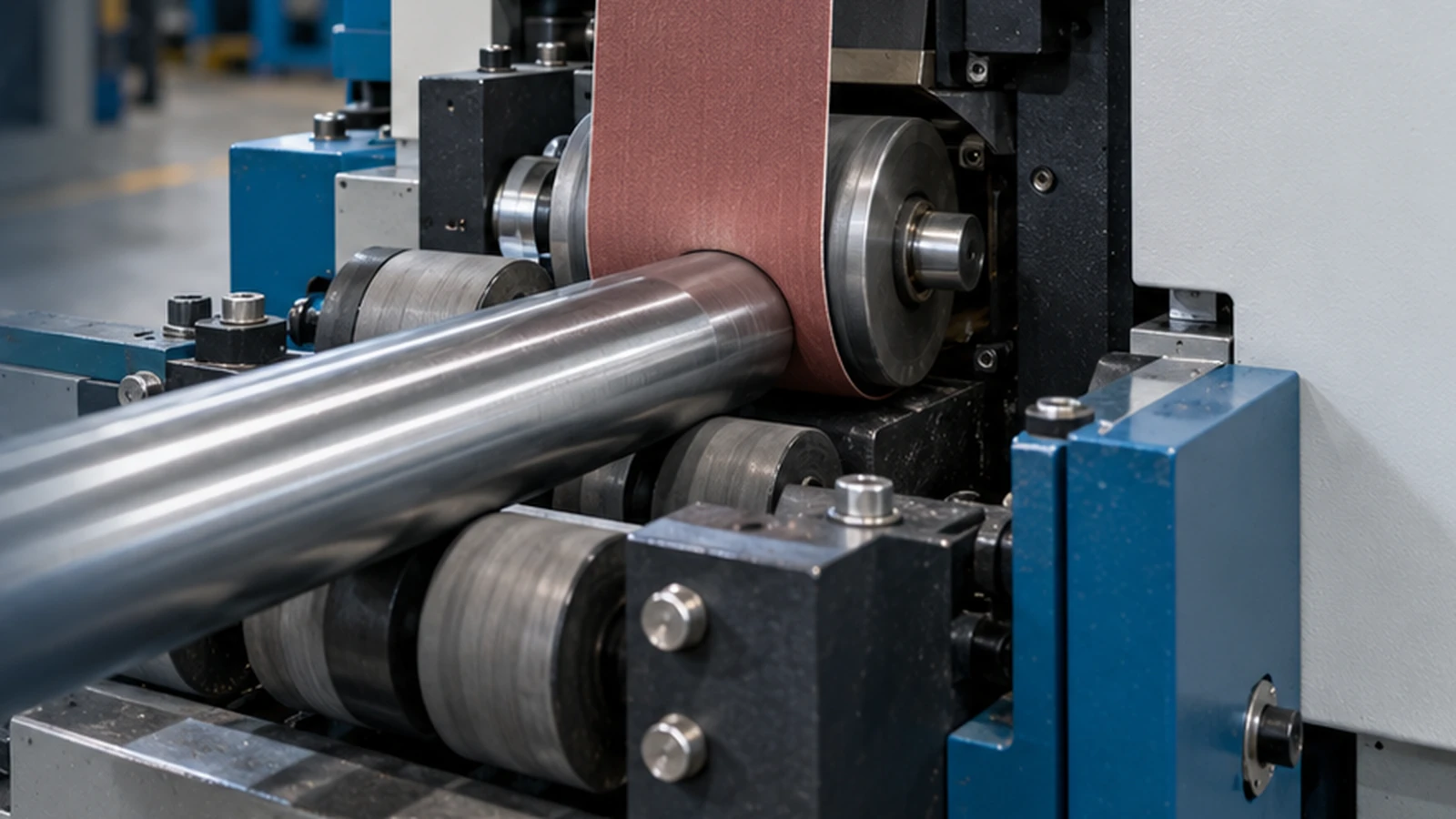
Centerless grinding supports the workpiece externally rather than locating it between centres or in a chuck. The grinding wheel removes material, the regulating wheel controls workpiece rotation and axial movement, and the work-rest blade establishes the supporting position.
That arrangement is naturally suited to round bars, shafts, rollers, sleeves and other cylindrical components with a stable outside surface. The important requirement is continuity of support. A part may be nominally round and still be a poor centerless-grinding candidate if large interruptions, deep keyways, abrupt geometry changes or unstable sections prevent consistent contact through the grinding zone.
Shoulders, diameter steps and tapered regions do not automatically exclude the process, but they can change the appropriate grinding mode and loading method. The buyer should therefore provide a controlled drawing showing every diameter, taper, shoulder, groove, interrupted feature and ground length before asking suppliers to select a machine.
Buyers reviewing Haige’s centerless grinding machine range should treat the product category as the beginning of the selection process rather than the final machine choice. The correct model depends on how the actual workpiece will enter, remain supported and leave the grinding zone.
Through-Feed and Plunge Grinding Solve Different Production Problems
Through-feed grinding is usually the stronger option when the workpiece has a continuous cylindrical outside diameter along the section being ground. The regulating wheel controls both workpiece rotation and axial movement, allowing the part to move continuously through the grinding zone.
This makes through-feed attractive for repeat production and line integration, but only when entry support, exit support and part geometry allow stable movement. Long bars in particular need more than a suitable grinding wheel. They need a handling system that keeps the workpiece aligned as it enters and leaves the machine.
Plunge, or infeed, grinding is different. Instead of feeding the full workpiece continuously through a fixed grinding gap, the grinding and regulating system works on a defined region of the part. It can be considered for certain shoulders, stepped diameters, formed regions or shorter grinding lengths where through-feed movement is unsuitable.
For an RFQ, buyers should avoid writing only “centerless grinder required.” State whether the ground section is continuous, whether the workpiece has shoulders or steps, and whether through-feed, plunge or supplier-recommended processing is acceptable. That gives bidders a much clearer basis for machine selection.
Incoming Bar Condition Defines the Real Grinding Window
A centerless grinder can refine outside diameter, roundness and surface condition, but it should not be expected to correct every upstream defect. Excessive bend, unstable incoming geometry or inconsistent stock allowance can interfere with feeding and make grinding results harder to hold.
Straightness is therefore a process-entry condition rather than a benefit that should be assumed from the grinder itself. If incoming bars vary significantly, the line may need an upstream straightening step before precision grinding.
Haige already covers this topic in more depth in its bar straightness before grinding and polishing article. For the grinder-selection decision, the main requirement is simpler: define the actual incoming straightness window and confirm that the proposed handling and grinding process can accept it.
Stock allowance needs the same discipline. Grinding should remove a planned amount of material, not become a catch-all operation for defects that should have been removed by peeling or another upstream process.
A useful process route might assign different tasks to different stages:
- straightening controls bend;
- peeling removes a defined outer layer and deeper surface defects;
- grinding refines diameter, roundness and surface condition;
- polishing addresses final appearance or another surface requirement.
The buyer should provide representative incoming diameter, straightness, roundness, defect condition and material state together with the required final diameter and finish. That gives the supplier enough information to evaluate the process window instead of selecting the grinder from the finished dimension alone.
Place the Grinder Where Its Result Can Be Preserved
The correct location of an automatic centerless grinder depends on what reaches the machine and what happens immediately after it.
If raw bars still contain severe scale, significant bend or deep surface defects, upstream preparation may be necessary before precision grinding. If the bars have already been straightened and peeled, the grinder can be used to refine geometry and surface condition before polishing, testing, cutting or packing.
The downstream side matters just as much. Transfer rolls, guide systems, accumulation tables and bundle handling can mark or bend long stock after it leaves the grinding zone. Coolant or grinding residue may also interfere with downstream inspection or surface finishing if cleaning and filtration are not part of the line design.
A grinder that produces the correct result at the wheel does not automatically guarantee that the same result reaches the packing station. The line layout should therefore be reviewed in both directions:
- What condition reaches the grinder?
- What result leaves the grinder?
- Which downstream equipment must preserve that result?
This is especially important in projects where the grinder is being added to an existing line rather than installed as part of a completely new system.
Automatic Grinding Is Often Limited by Material Handling, Not Grinding Power
Automation only creates useful capacity when the workpiece can enter and leave the machine at a repeatable rate. In long-bar production, the grinding cycle may not be the slowest part of the line. Bundle loading, bar separation, entry guidance, transfer, accumulation and unloading can become the real throughput bottlenecks.
The handling concept should therefore be evaluated together with the grinder.
Important inputs include:
- minimum and maximum bar length;
- bar diameter range;
- individual bar weight;
- incoming straightness;
- end condition;
- surface friction or scale condition;
- required line output;
- target pieces per hour or tonnes per shift;
- upstream supply rhythm;
- downstream accumulation capacity.
A machine that can grind faster than the loader can separate bars will spend part of its cycle waiting. A high-capacity loader also provides little benefit if the exit table cannot clear finished bars quickly enough.
This means the buyer should ask suppliers to return not only a nominal machine capacity, but also the expected processing rate under the stated workpiece and handling conditions.
Define the Automation Boundary Instead of Asking for an “Automatic Machine”
“Automatic” can describe very different project scopes.
Depending on the application, automation may include:
- bundle loading;
- single-bar separation;
- entry alignment and guidance;
- automatic wheel positioning;
- dressing cycles;
- in-process or post-process gauging;
- automatic size compensation;
- sorting;
- exit collection;
- line communication and interlocks.
Not every project needs all of these functions, and not every machine quotation includes them.
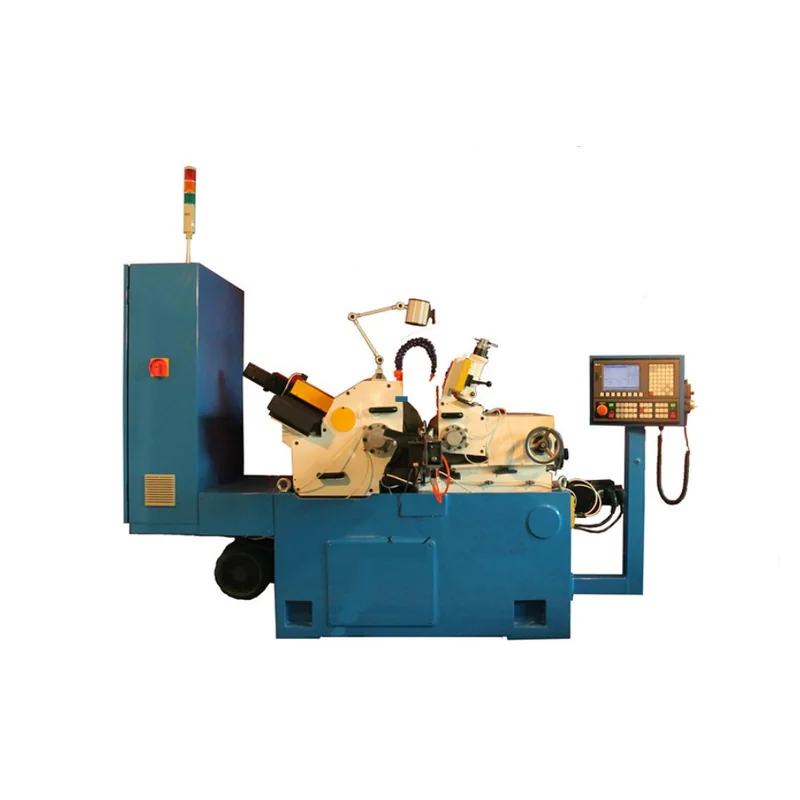
The TDC centerless grinding machine is a relevant product example because its product description identifies the grinding wheel, regulating wheel and work rest as the core grinding system and notes integration with automatic feeding arrangements.
For a serious project quotation, buyers should ask suppliers to separate:
- the compliant base grinding machine;
- included material handling;
- included gauging;
- included coolant and filtration;
- optional automation;
- project-specific integration work.
That prevents two suppliers from appearing to quote the same “automatic grinder” when one includes a complete loading and gauging system while the other includes only an automation-ready machine.
Wheel, Dressing and Coolant Stability Determine How Long Automation Can Run
Grinding-wheel selection should follow the material, hardness, stock removal, required finish, heat sensitivity and expected production rate. The regulating wheel and work-rest blade also influence workpiece behaviour because they affect how the part rotates and sits relative to the grinding contact.
For an automatic line, these choices affect more than the first acceptable part. They affect how long the machine can continue producing within the required size and surface window before adjustment is needed.
Dressing is particularly important. As the grinding wheel changes during production, dressing restores its form and cutting condition. If dressing intervals are unstable or require frequent manual intervention, a high nominal grinding rate may not translate into high line availability.
The RFQ should therefore ask:
- how dressing is initiated;
- whether it is manual, timed, cycle-based or measurement-driven;
- which setup parameters are controlled;
- how the machine returns to a verified condition after dressing;
- what operator intervention remains necessary.
Coolant and filtration belong to the same process-stability discussion. Coolant delivery, temperature control, filtration, swarf removal and mist management affect heat control, wheel condition and the cleanliness of downstream inspection.
For line projects, the supplier should clearly state where its coolant and filtration responsibility begins and ends.
Is Centerless Grinding a Good Fit for the Application?
| Application Question | Centerless Grinding Is a Stronger Fit When | Further Validation Is Needed When |
| Workpiece geometry | The ground surface is cylindrical and can remain continuously supported | The part contains large shoulders, interruptions, tapers or non-round sections |
| Production pattern | Repeated production justifies stable setup and controlled feeding | Lots are small, highly mixed or require frequent setup changes |
| Incoming condition | Straightness, surface condition and stock allowance are within an agreed window | Bend, defect depth or incoming variation is poorly controlled |
| Required result | Diameter, roundness and surface condition have measurable acceptance limits | The requirement relies mainly on subjective terms such as “perfect finish” |
| Automation | Loading, guidance, gauging and exit handling support the required line rate | Material handling remains undefined or creates a likely bottleneck |
| Line integration | Upstream and downstream interfaces are defined before machine selection | Ownership of gauging, coolant, transfer or controls remains unclear |
A “stronger fit” does not mean the machine is approved. It means the application is compatible enough to justify detailed technical review and proof testing.
Proof Trials Should Test the Process Window, Not One Ideal Bar
A representative proof trial is one of the strongest ways to reduce risk before a centerless grinding project is released.
The trial should not use only an unusually straight, defect-free sample selected because it is easy to grind. Samples should represent normal production variation and, where practical, the difficult edges of the stated incoming condition.
A useful trial plan should record:
- material grade and condition;
- incoming diameter and straightness;
- incoming surface defects;
- stock allowance;
- grinding mode;
- wheel and regulating-wheel setup;
- number of trial pieces;
- feed or cycle parameters;
- final inspection method;
- observed handling or stability issues.
Depending on the project, final inspection may include diameter at multiple positions, roundness, straightness, surface roughness and visual condition. Each characteristic should have its own measurement method and acceptance limit.
One surface-roughness result does not prove dimensional stability over a long bar. Likewise, a good diameter result does not prove that the workpiece will feed reliably in an automatic line.
The most valuable trial reveals the usable process window. If success depends on sorting incoming bars, adding an upstream straightening operation, reducing the target production rate or changing stock allowance, that condition should appear in the supplier’s final offer.
Ask for Throughput Under Stated Conditions, Not an Isolated Capacity Number
Project buyers often receive a machine capacity figure without enough context to understand how it was calculated.
For an automatic centerless grinder, useful throughput information should be tied to a stated workpiece:
- diameter;
- length;
- material condition;
- stock removal;
- required surface result;
- grinding mode;
- feeding method;
- inspection requirement.
The quotation should also clarify whether the stated output includes:
- loading and unloading time;
- dressing downtime;
- gauging;
- routine adjustment;
- tool change or setup change;
- normal transfer delays.
This makes output figures more useful when buyers compare alternative machines or evaluate whether the proposed grinder will meet the takt requirement of the complete line.
What Should Buyers Include in an Automatic Centerless Grinder RFQ?
A useful equipment RFQ should give the supplier enough information to evaluate both the grinding process and the surrounding line.
Include:
- product drawing;
- surfaces to be ground;
- minimum and maximum diameter;
- minimum and maximum bar length;
- unit weight or weight range;
- material grade and condition;
- incoming straightness and geometry;
- stock allowance;
- surface-defect description;
- required final diameter and tolerance;
- roundness requirement where applicable;
- surface-finish requirement;
- batch pattern and product mix;
- target output, takt or production rate;
- current upstream equipment;
- planned downstream process;
- available utilities;
- required inspection and documentation.
Photographs, existing production records and representative samples can be useful where the real incoming surface or bend condition cannot be described accurately in a table.
What Should the Supplier Return With the Quotation?
The response should give more than a machine model and total price.
Ask the supplier to return:
- proposed grinding mode;
- accepted workpiece range;
- machine configuration;
- grinding-wheel and regulating-wheel concept;
- dressing strategy;
- loading and exit-handling arrangement;
- gauging method;
- coolant and filtration boundary;
- utilities;
- safety and control interfaces;
- expected production rate under the stated conditions;
- included automation;
- optional automation;
- trial procedure;
- inspection method;
- documentation scope;
- all technical assumptions and deviations.
Optional automation should be separated from the compliant base process. If the quoted production rate depends on additional handling equipment, incoming-bar sorting or another upstream operation, that dependency should be visible in the offer.
Move From a Machine Search to a Defensible Process Choice
An automatic centerless grinder becomes a strong choice when the workpiece geometry, incoming condition, stock allowance, grinding mode, handling concept and required line rate can all be brought into one stable process window.
The final decision should therefore compare more than spindle power or a headline capacity. Buyers should look at how the workpiece enters the machine, how long the grinding process can remain stable between interventions, how the finished bar is measured, and whether downstream equipment can preserve the result.
When those conditions are clear, buyers can submit the drawing, workpiece range, incoming condition, target finish, production rate and line-layout requirements through Haige’s centerless grinding application inquiry form. The returned proposal should identify the process route, automation boundary, expected throughput, proof-trial requirements and any assumptions that could affect performance.