Improving Bar Straightness Before Downstream Grinding and Polishing
Improving Bar Straightness Before Downstream Grinding and Polishing
Bar straightness is one of the most practical quality factors in metal finishing. Even when the surface has been peeled or turned correctly, poor straightness can create problems in grinding, polishing, drawing, inspection and automatic feeding. For bright bar production lines, straightening is not an optional step; it is often the link that keeps the whole process stable.
Why straightness affects downstream processes
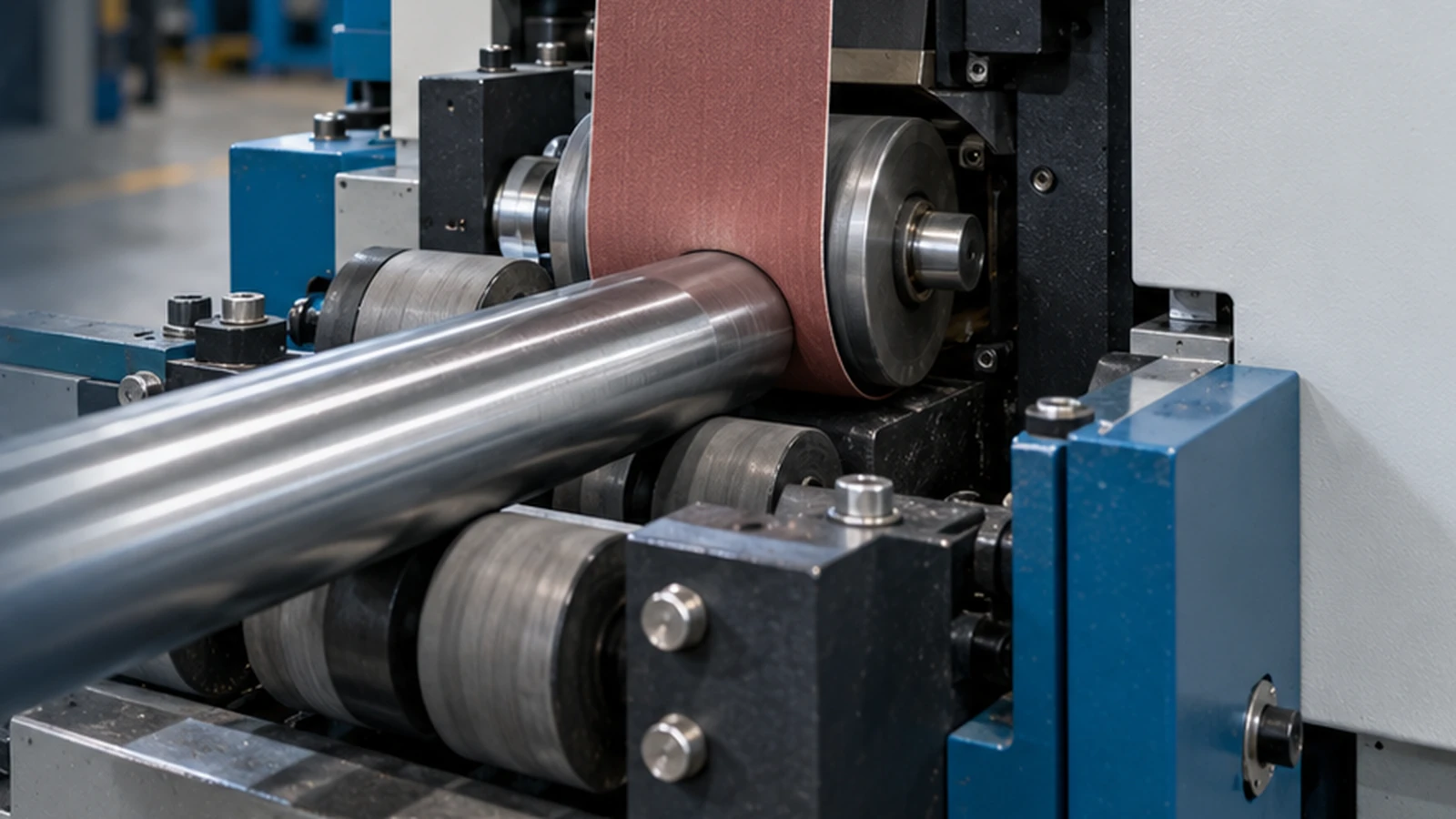
When a bar is not straight, contact pressure becomes uneven during abrasive belt grinding or polishing. This may lead to inconsistent surface marks, unstable feed, vibration and lower efficiency. In automatic production, bending can also make loading, guiding and discharge less reliable, especially when the line handles long bars or high-volume batches.
Before purchasing or configuring a metal finishing line, manufacturers should consider straightness requirements together with material grade, diameter range, original bar condition and target output. The correct machine should be selected for the real production scenario rather than treated as a general-purpose accessory.
Common factors in straightening equipment selection
– Material type: Carbon steel, alloy steel, stainless steel and non-ferrous metals may require different machine settings.
– Diameter and length: The working range determines roller layout, support structure and line arrangement.
– Previous process: Bars after peeling, grinding or drawing may have different stress and surface conditions.
– Target use: Bearing steel, tool steel, hydraulic rods and precision bright bars often need stricter control.
– Production flow: Straightening should match the speed and rhythm of the complete line.
Signs that the straightening process should be upgraded
A factory may need to improve its straightening process when operators spend too much time correcting feeding problems, when finished bars show uneven marks, or when downstream machines cannot maintain stable speed. These problems are sometimes hidden in the early inquiry stage because the buyer focuses only on the visible finishing machine. In practice, the real productivity of a line depends on how smoothly each section hands material to the next section.
Bent bars can create inconsistent pressure at guides, rollers and abrasive belt units. This increases tool wear and may force operators to slow the line. Manual correction also adds labor time and makes quality less repeatable from batch to batch. For export buyers, better straightness control can reduce rework and improve finished product stability.
Planning straightening with peeling and polishing
The most practical route is to evaluate the straightening position within the complete production sequence. Some bars may need rough straightening before peeling so the material can pass through the centerless lathe smoothly. Other products may require finishing straightening after peeling or grinding to meet the final customer requirement. The correct arrangement depends on material, original bend, diameter, length, surface target and inspection standard.
Long bars also require enough support during loading and unloading to avoid new bending during transfer. For high-volume production, integrated feeding, straightening, polishing and unloading can reduce repeated handling. For mixed-size production, a flexible layout may be better because it allows the factory to handle different orders without excessive changeover time.
Haige’s approach to line configuration
Haige provides metal finishing equipment for bars, tubes and wire rods, including centerless lathes, bar peeling machines, straightening machines, drawing machines, polishing lines and auxiliary equipment. Instead of viewing each machine separately, Haige helps customers consider how feeding, peeling, straightening, polishing, inspection and packaging can work together as a complete production process.
Customers can provide material specifications, bar size, current straightness condition, required final straightness and production capacity. With these details, Haige can discuss whether a single straightening machine is enough or whether a complete bar finishing line will provide better stability for long-term production.