Export Packaging and Service Support for Metal Finishing Equipment Projects
For overseas machinery projects, equipment performance is only one part of the buying decision. Export packaging, loading arrangement, spare parts preparation, installation guidance and after-sales communication all affect whether the project can move smoothly from factory delivery to production start-up. This is especially important for large metal finishing equipment and complete bright bar production lines.
Why export packaging matters
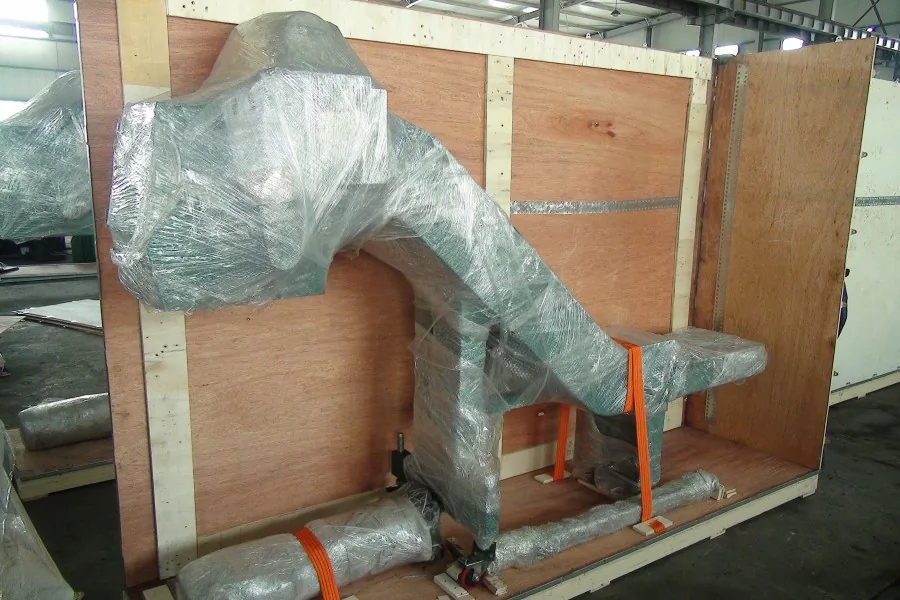
Metal finishing machines such as bar peeling machines, centerless lathes, straightening machines and polishing lines often include heavy frames, precision components, electrical systems and auxiliary devices. During long-distance shipping, packaging must consider moisture protection, collision prevention, lifting points, container space and easy unloading at the destination.
A practical export packaging plan helps reduce transport risk and makes site preparation easier. Clear marking, stable fixing, parts classification and documentation can save time when the customer receives the equipment.
What should be prepared before shipment
– Equipment protection: Important surfaces, electrical cabinets and precision parts should be protected before loading.
– Container planning: Large machines and auxiliary equipment need organized loading to improve safety and space use.
– Spare parts arrangement: Wearing parts and project-specific accessories should be checked before dispatch.
– Technical documents: Drawings, operation information and installation guidance support smoother handover.
– Communication schedule: Customer, supplier and logistics teams should stay aligned before delivery.
Project risks reduced by better packing
Good packaging does not only protect the machine body. It also helps the customer identify components after arrival. For a complete line, the buyer may receive multiple machine sections, electric cabinets, guards, tooling, accessories and spare parts. If these are not labeled clearly, installation can slow down before the equipment is even powered on. A clear packing list, organized parts and visible marks make the receiving process easier.
Container loading should also consider weight balance, lifting sequence and protection for exposed parts. Large machines should be fixed to reduce movement during transport. Electrical cabinets and smaller accessories should be protected from moisture and impact. These details help avoid avoidable damage and reduce communication after delivery.
Service support after equipment arrival
Export service does not stop when the container leaves the factory. After the equipment arrives, customers often need support for unpacking, installation sequence, commissioning, operator training and first production adjustment. For a single machine, this may involve checking the installation base, power connection, lubrication, tool setup and safety protection. For a complete production line, it may also involve aligning feeding units, testing each process section and confirming the material flow from input to output.
Haige’s export and service support
Haige has experience supplying metal finishing equipment to overseas markets and supports customers with technical communication, equipment configuration, operator training, installation guidance, commissioning support and long-term service. For international buyers, this service system can reduce uncertainty before and after shipment.
When planning an export project, customers can provide the target equipment type, bar size range, workshop layout, destination port and expected installation schedule. Haige can then coordinate product preparation, packaging, loading and technical support around the actual project requirements. This practical approach helps customers source specialized metal finishing machinery with clearer steps and fewer obstacles.