
Profile Polishing Machine
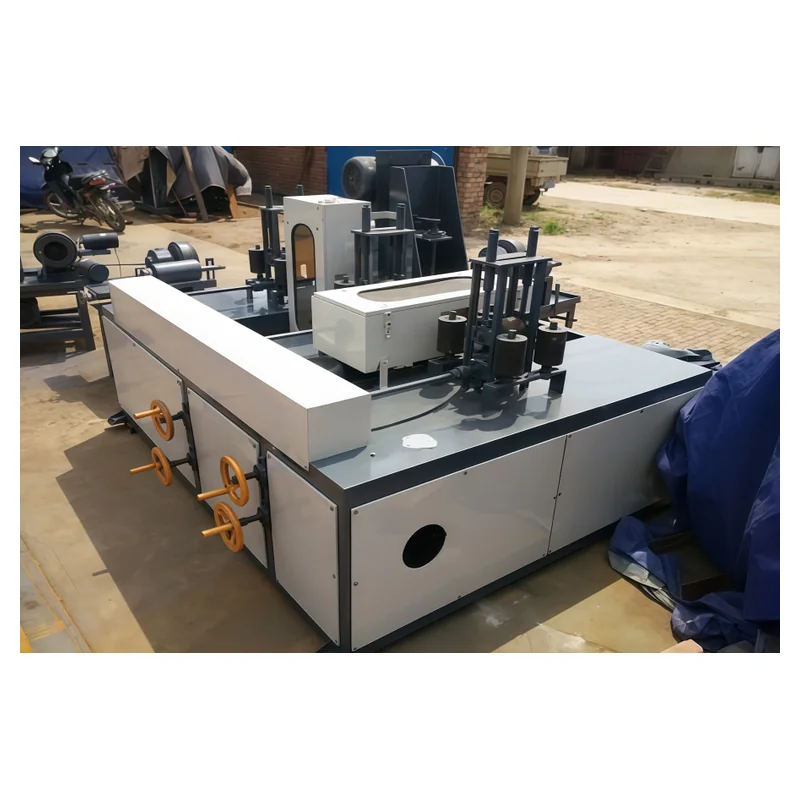
Profile Polishing Machine
The profile polishing machine is dedicated equipment for deburring, rust removal, hairline finishing and mirror polishing of long and special-section profiles, such as square tubes, round tubes, angle steel, aluminum extrusions and decorative mouldings. It is widely used for surface finishing of metal and wooden profiles.
I. Core Applications
Metal Profiles: Stainless steel, aluminum alloy and carbon steel square tubes, round tubes, channel steel and angle steel for descaling, rust removal, hairline finishing and 8K mirror polishing. Architectural Decoration: Door & window aluminum extrusions, curtain wall keels, skirting boards and wall panels to upgrade surface finish and corrosion resistance. Wood Furniture: Solid wood mouldings, frame stocks and uprights for sanding, brightening and burr removing.
II. Common Types & Structure
1) Four-side Polishing Machine (Most Widely Used)
Fitted with four groups of polishing wheels (top / bottom / left / right). One single feed completes synchronous four-side polishing without workpiece flipping. Optional oscillating version: polishing assemblies travel left and right reciprocally to eliminate straight grinding lines and dead polishing areas.
2) Flat Polishing Machine
Designed for wide plates and flat profiles; high-speed grinding via cloth wheels or nylon wheels to obtain mirror or hairline surface.
3) Round Tube & Bar Polishing Machine
Multiple abrasive/cloth wheels arranged circumferentially, ideal for outer diameter polishing of round tubes and solid bars.
4) Abrasive Belt Polishing Machine
Features high grinding efficiency, sharp finished edges and low dust generation, applicable for rough & fine grinding on stainless steel and aluminum materials.
III. Working Principle
Profiles are fed at adjustable constant speed by conveyor or feed rollers.
Motors drive polishing wheels / abrasive belts to rotate at 1000–3000 rpm.
Abrasive media (flap wheels, nylon wheels, cloth wheels, hemp wheels) remove surface defects and lower roughness through micro-cutting and friction contact with workpieces.
Combined multi-stage process: Rough grinding (defect elimination) → Intermediate grinding (surface leveling) → Fine polishing (mirror / hairline finish).
IV. Key Configuration & Selection Guidelines
Polishing Wheels: Flap wheel (rough grinding), nylon wheel (hairline finish), cloth/wool wheel (mirror finish), hemp wheel (matte finish). Control System: PLC + touch screen, supporting stepless speed control, adjustable pressing force and automatic feeding. Dust Collection & Environmental Protection: Dust port matching with dust collector; dry or wet dust extraction available optionally. Applicable Specifications: Profile width, height, length and cross-section (square, round, irregular shape).
V. Typical Aluminum Mirror Polishing Process
Rough polishing: Flap wheel + purple polishing wax to remove oxide scale and deep scratches.
Intermediate polishing: Hemp wheel + green polishing wax for matte surface leveling.
Fine polishing: Soft cloth wheel + white polishing wax for mirror finish (Ra ≤ 0.05 μm).